
I have been building online retail with my own hands for over 20 years. It started with my own shops on Shopify, WooCommerce and everything else there was: product, tech, marketing, logistics, the whole craft from the ground up. That hands-on experience is why I know today where retail actually makes money and where it loses it.
Why live commerce is the next stage
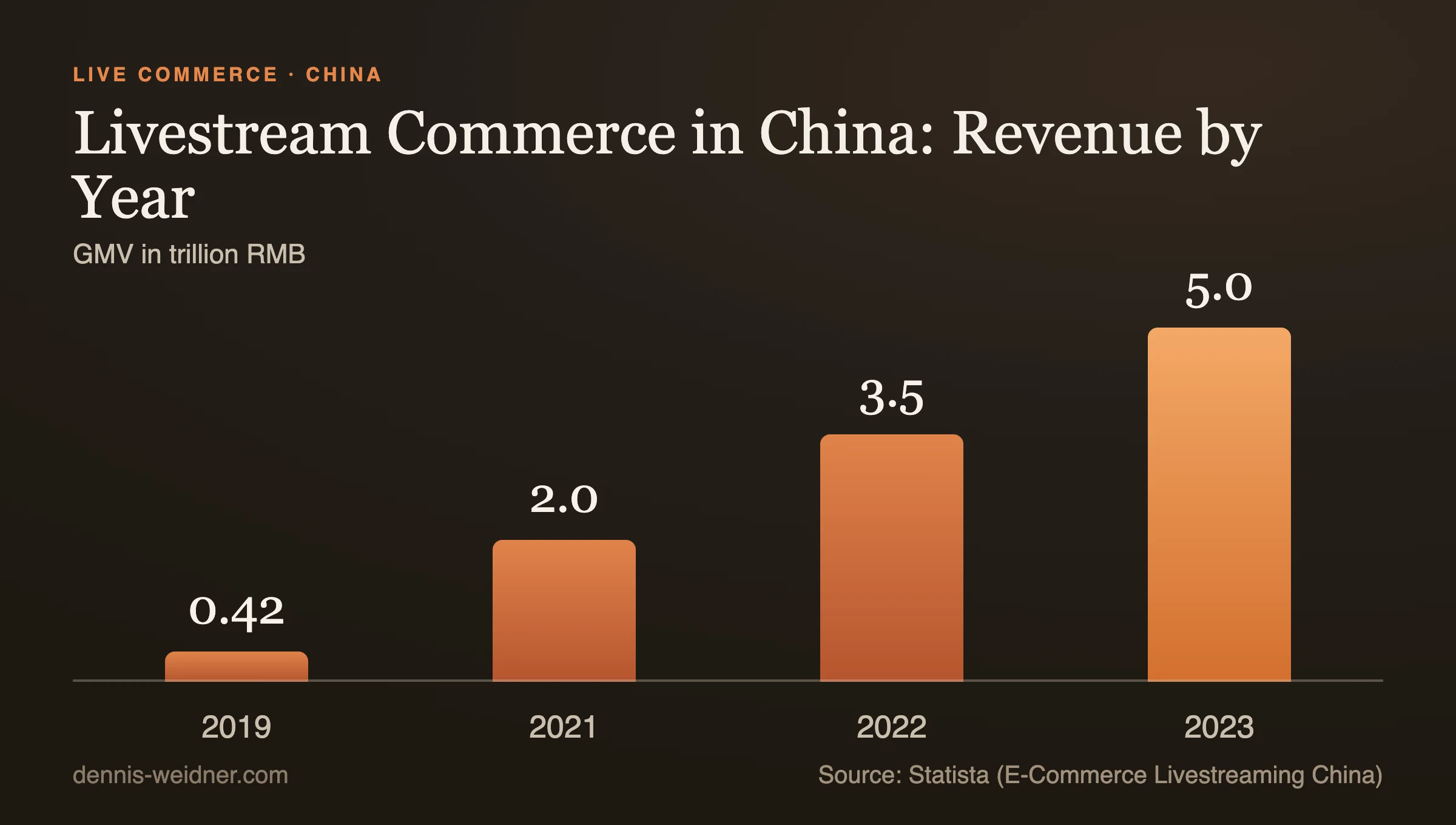
Retail and content are merging. What has long been everyday life in Asia is now tipping over here too: a host goes live, shows products, and the community buys in real time. The appeal is not a tech gimmick, it is deeply human – closeness, community, the moment. In China this market has exploded in just a few years.
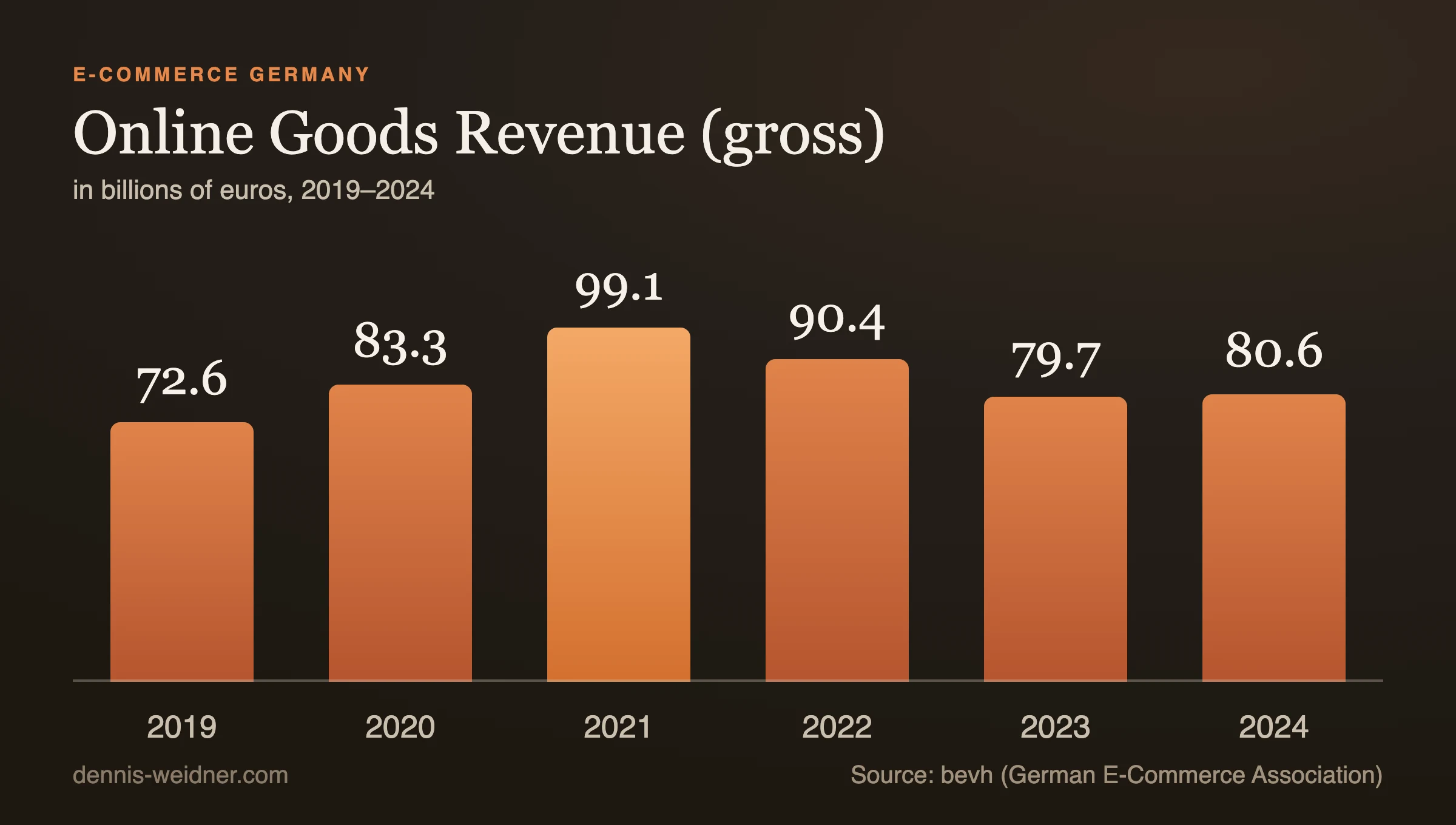
German e-commerce has grown up into a large, mature market. That is exactly where the opportunity lies: where the overall market grows only moderately, live commerce grows several times faster.
How live commerce actually works
A live sale is neither teleshopping nor a video call. It is a discipline of its own. There is a host who genuinely knows the range, a chat where questions get answered on the spot, and a basket in the same window. The purchase happens the moment the question is answered: no product page, no comparison across four tabs, no three days of thinking it over.
Three things have to work together technically. A stream with low latency, so answers land as answers rather than as afterthoughts. A checkout that settles payment and shipping in seconds, because every extra step costs you exactly when the decision is being made. And inventory that updates in real time: selling the same item twice during a show destroys the very trust the format runs on.
The hardest part is none of these. It is regularity. One show a month builds no habit, three shows a week do. Live commerce is a schedule, not an event.
Why the conversion looks so different
The difference from a classic shop is not the range, it is the buying situation. In an online shop, someone decides alone, with open questions and a comparison tab next to it. In a stream, they decide in conversation, in front of an audience, with someone who stands behind what they say.
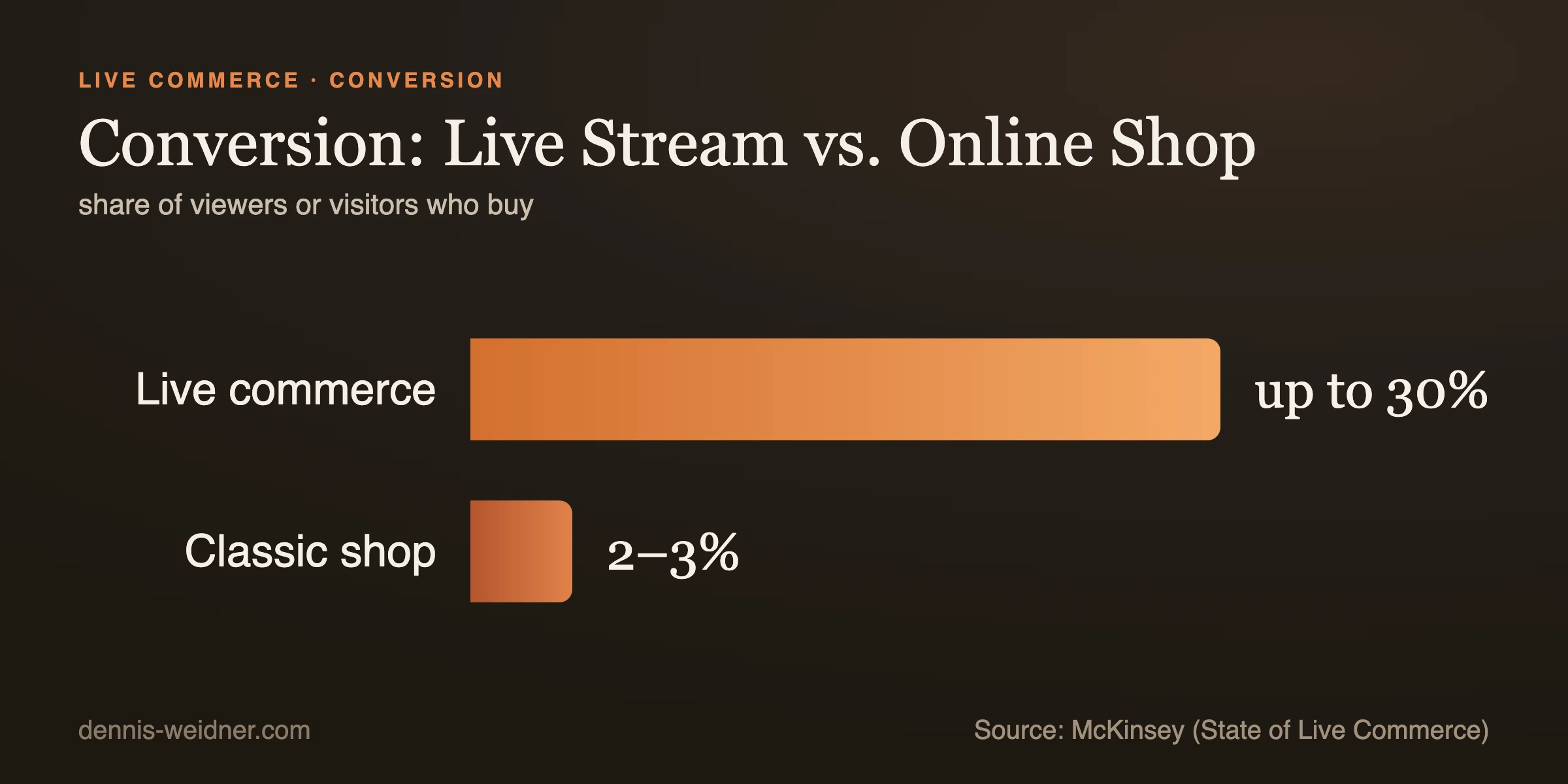
Numbers like these are best-in-class figures from well-run formats, not a law of nature, and they refer to viewers rather than to reach. The direction is unambiguous nonetheless, and it explains why retailers take on the very real effort of a live production at all.
Market and competition
The global live commerce market is estimated at around 173 billion US dollars for 2025 and is projected to grow to over 2.5 trillion by 2033 (CAGR roughly 41 percent, Grand View / Business Research Insights). How fast that goes is clear from the platforms themselves: for 2024 TikTok Shop reported around 33 billion US dollars in gross merchandise value worldwide, 9 billion in the US alone (up 650 percent year over year, Momentum Works). Whatnot, the pioneer of trading-card live auctions, passed 3 billion and is aiming for more than 6 billion in 2025.
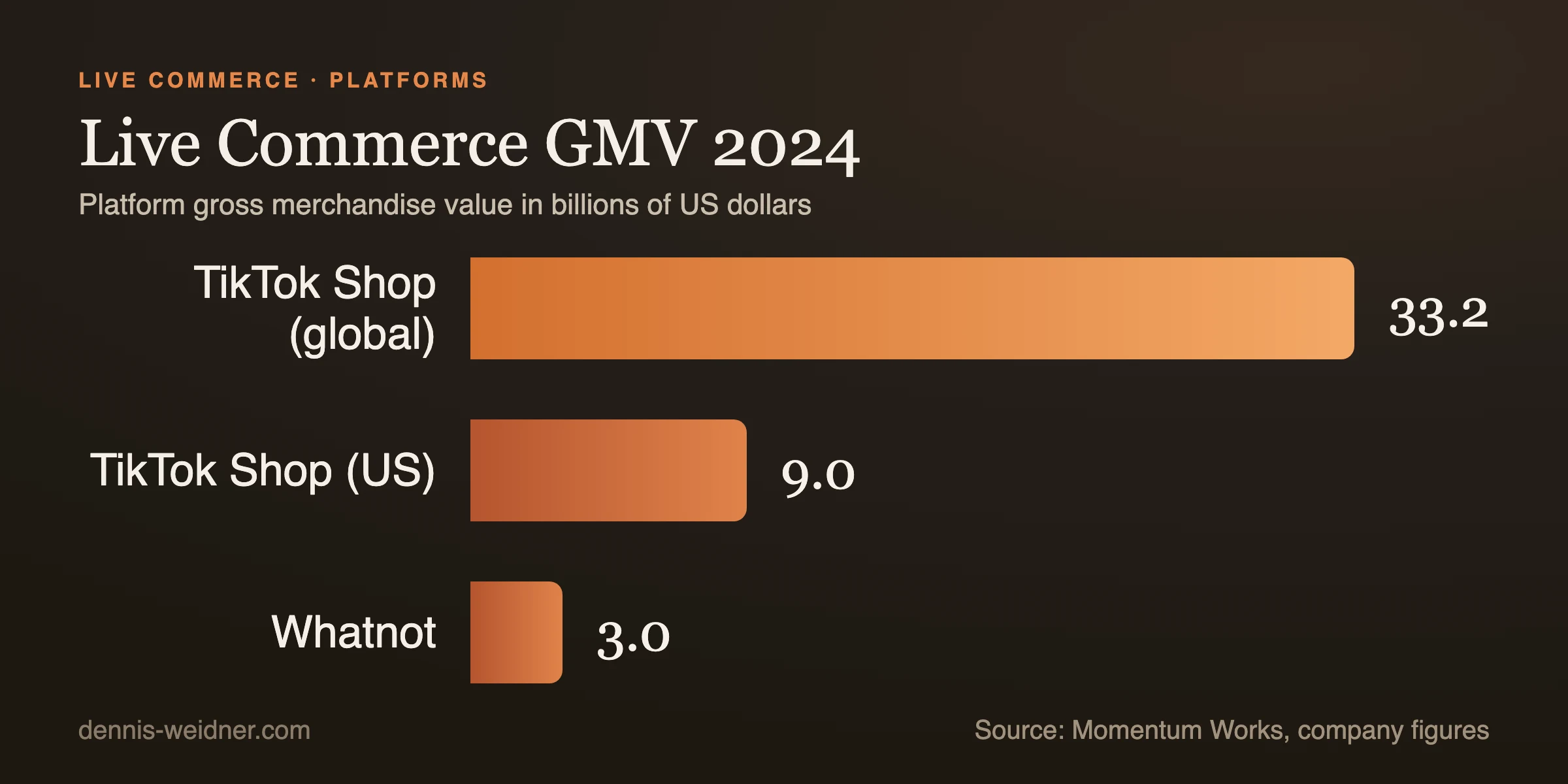
For a curated, trust-first niche marketplace like Slabhit, that is the crucial tailwind: demand is proven, the big platforms are lifting the whole market, and in the German-speaking collector segment there is still plenty of room for specialization.
Who it pays off for, and who it does not
Live commerce pays off when three conditions meet: the product needs explaining or has collector value, the margin carries hosting and returns, and there is a reason to come back. Trading cards, sneakers, jewellery, cosmetics, quality tools, wine: in all of these, the conversation creates real value, because viewers see and learn something that no product page carries.
It does not pay off for interchangeable mass-market goods on thin margins. If you sell standard items that every marketplace lists two euros cheaper, you will not hold an audience and you still carry the production cost. A range without resupply is just as critical: a live format burns through stock faster than an average buying team can replace it.
The honest calculation goes beyond the show itself. Hosting, preparation, product photography, next-day shipping and a noticeably higher share of follow-up questions all belong in it. Skip those costs in your plan and you will see a great conversion rate and still no profit.
Auction or buy-now: two formats, two economics
There are two basic forms in a stream, and they differ economically far more than most people expect. With buy-now, the price is fixed, the host works through the range, and revenue grows with the number of items shown. It is predictable, easy to calculate and the obvious entry point for brands.
The auction works differently. The price is set by the audience, the upside is open and so is the downside. It needs enough concurrent viewers, otherwise you sell below value, and it needs goods whose worth the community can judge. That is precisely why it is so strong in collectibles: with a graded card, everyone in the chat knows what is being discussed.
Mixing both is fine, as long as it is a decision. Auctions create tension and hold viewers, buy-now creates the predictable part of revenue. A format without that decision feels arbitrary, and arbitrariness is the most expensive problem in live retail: it does not cost you conversion, it costs you the return visit.
What additionally applies in Germany
Selling live means selling at a distance in the legal sense. Right-of-withdrawal notices, prices including shipping, information duties and the question of whether a stream auction legally counts as an auction do not decide the appeal of the format, but they do decide its durability. It is the part international platforms like to skip, and in the German-speaking market it is what makes the difference in the end.
Where I would start
Not with the technology. Start with the range: thirty items that have a reason to be shown. Then a fixed slot in the week that you actually keep. Then a format with a recognisable structure, so viewers know what they are signing up for. Only once three shows have happened back to back is it worth investing in a studio, lighting and your own platform. The first show is allowed to look like a first show. The tenth is not.
How I work
I do not talk about retail, I build it. I use new technology myself before I recommend it – today with AI agents in the engine room. My time at Rocket Internet shaped me: heart and passion, first into the office and last to leave, owning your mistakes, being a team player and staying curious. That attitude sits inside every project I touch.
Frequently Asked Questions
What is live commerce?
Selling via live video stream: a host shows products in real time while the community asks questions and buys directly. It combines the closeness of physical retail with the reach of the internet.
Why is live commerce interesting right now?
German e-commerce is mature and grows only moderately, while live commerce grows several times faster. In China the market grew twelve-fold in four years – here it is only just beginning.
Which products suit live commerce?
Anything that needs explaining or has collector value, with a margin that carries hosting and returns: trading cards, sneakers, jewellery, cosmetics, wine. Interchangeable mass-market goods on thin margins do not work.
What qualifies you in retail?
Over 20 years of hands-on online retail with Shopify, WooCommerce and more, from product to marketing to logistics – today with AI agents and the live-commerce platform Slabhit.
